
Welcome to Gliitch
Glitch is our experimental art space, featuring the work of Australian artist Darren Pryce. His practice explores the tension and resolution between established artistic traditions and emerging digital technologies, bringing painting, drawing, printmaking, photography and digital processes into a fluid dialogue. His work is driven by a fascination with transformation: what happens when familiar forms, images and ideas are disrupted, reassembled or pushed beyond recognition. Pryce embraces both control and accident, allowing physical materials and digital processes to collide and produce unexpected possibilities. The resulting works occupy a space between the recognisable and the strange, the physical and the virtual, tradition and technological change. Rather than offering fixed interpretations, they invite us to look again, question perception and reconsider what we think we know. Glitch presents a practice in continual evolution, where experimentation becomes a way of exploring perception and possibility.
Visit Premier Exhibition
Porous : Portraits of Dissolving Identity


"These paintings begin with the language of the historical portrait: the formal pose, the costume, the theatrical lighting, the composed expression and the authority of the painted sitter rendered in oil paint on canvas. Yet something has gone wrong. Faces dissolve, stretch, fragment and become entangled with lines, membranes, shadows and abstract forms. Bodies appear to merge with their surroundings; identities become uncertain; familiar expressions are interrupted by something irrational and unknowable.
Historically, portraiture has been used to tell us who someone is — projecting their status, wealth, power, gender, profession or place within society. These paintings take that supposedly stable image of the individual and allow it to become unstable. The distortions are not simply acts of destruction. They behave more like psychic extrusions from an interior world. A face may become a landscape, a thought, a biological form, a memory or an abstract system. Lines spill beyond the boundaries of the body as though the sitter can no longer contain what-ever is happening inside them. The grandeur of historical portraiture is deliberately undermined by strange transformations: a distinguished figure becomes almost animal-like; a face folds into an impossible geometry; a formal costume becomes a theatrical disguise. The fragmentations serve to unmask the performed identity of the sitters to maybe reveal their psychological state and less constructed self.
The paintings sit somewhere between reverence and irreverence — attracted to the beauty and authority of the old masters while questioning the certainty of the subject they project. The series What Lies Within can be seen as works of identity becoming porous. They ask what remains of people when the recognisable faces, the social costume and the conventions used to describe them begin to break apart. Rather than presenting a fixed individual, they present identity as something unstable, performed and continually being rewritten."
– Darren Pryce
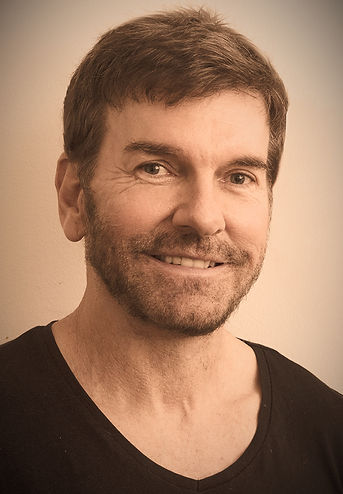
Darren Pryce
My practice exists between established and emerging forms of media, exploring the tension between traditional ways of making and the rapidly changing technologies through which we experience and understand the world. I work across painting, drawing, printmaking, photography, sculpture, moving image and digital technologies, including generative processes. I do not see these mediums as separate or opposing forms. Instead, I bring them together to see what happens when the physical and the digital, the familiar and the unfamiliar, meet and influence one another. The medium itself becomes part of the investigation: something to test, disrupt and transform. This allows my practice to remain open, changing with new technologies, ideas and discoveries rather than being defined by a single medium, style or subject.
I am interested in entering into subjects, experiences and contradictions that do not have simple answers, and using the act of making to explore and transform them.It is possible that art can intervene in something unresolved, not necessarily to solve it, but to make it visible, more bearable or open to reconsideration. The studio becomes a place where control and chance, technology and material, intention and accident can meet. What emerges is not necessarily a conclusion, but a space for further thought. What is worked through in the making is then passed to the viewer, who brings their own experience to it. In this exchange, the work can become a form of inquiry and, potentially, a kind of transformation.